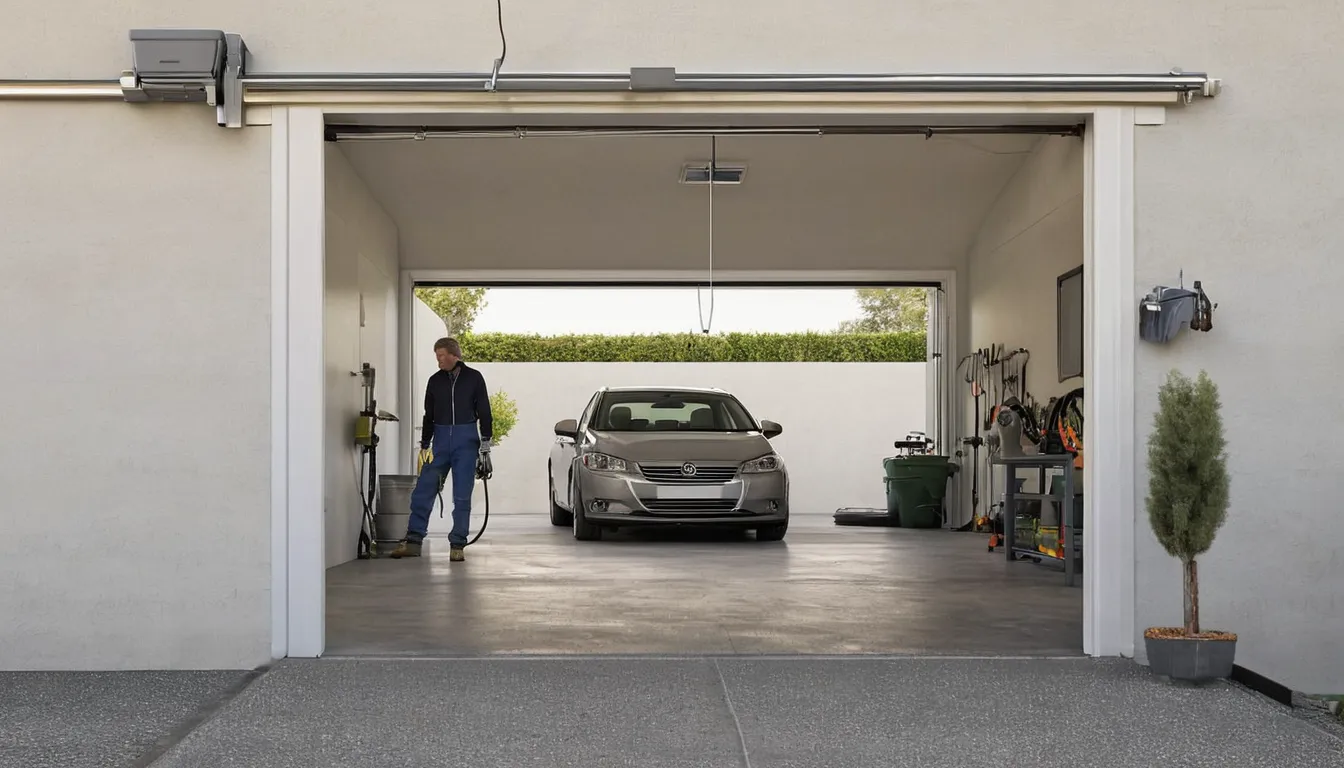
A garage door spring does the heavy lifting. It holds the weight of the door so the opener only has to guide it. When a spring wears out and snaps, the door suddenly feels like a slab of concrete, and the opener cannot move it. This page explains what is going on, what to do first, and what a repair visit looks like.
Rootsplayer Garage Doors is a referral service and does not do the work itself. It connects homeowners in the Tarpon Springs area with independent providers in our network who handle garage door spring repair. You will also find simple care habits here, so the new spring lasts longer, plus a plain look at typical prices.
Broken spring? Stop and step back
Think of the spring as the strong arm that does the lifting. The door is heavy, often well over a hundred pounds. When the spring gives out, that arm is gone, and the full weight lands on the opener, cables and tracks.
So the first rule is simple. Do not press the opener button again. Do not try to lift the door by hand. Keep kids and pets away from it, and do not stand under a door that is partly open.
How to tell a spring has failed
Springs rarely warn you before they quit. Still, there are clues to look for:
- A loud bang from the garage, like a dropped metal pan.
- The door rises a few inches and then stops.
- The opener hums or whirs, but the door stays put.
- One side of the door hangs lower than the other.
- A visible gap in the coil, or cables hanging loose.
Any one of these is enough reason to pause and ask a provider to take a look.
Torsion springs and extension springs
A torsion spring is like a twisted rubber band. It sits on a bar above the door and unwinds as the door rises. An extension spring is more like a bungee cord. It runs along each side of the door and stretches and shrinks as the door moves.
Many homes built from the 1970s through the 2000s have extension springs. Newer or heavier doors often use torsion springs. A provider can tell which one you have in a minute or two, and that decides the parts and the price.
Why this is not a weekend project
A wound spring is like a drawn bow. All that stored energy is waiting for a chance to let go. Providers use special winding bars and know how much turn each spring needs. A slipped tool can cause a serious injury.
Size matters too. A spring that is too weak lets the door drop. One that is too strong can make it jump upward. Getting the match right is part of the skill.
When it feels like an emergency garage service call
Some situations feel urgent. The car may be stuck inside. A storm may be on its way, and the door will not close. During hurricane season, a door that cannot shut is a real worry.
Many providers can respond quickly, but availability varies. Request a callback to check provider availability, and say plainly if the door is stuck open or shut.
What a spring replacement visit usually includes
Expect a provider to walk through a short list of tasks:
- Measure the door and the old spring to pick the right match.
- Release the tension safely and remove the broken parts.
- Fit new springs, often as a pair, since the second one is just as old.
- Check the cables, drums and rollers for wear.
- Look at track alignment, because a bent track strains the new spring.
- Lubricate moving parts and test the door's balance.
Standard and high-cycle springs
A cycle is one trip up and one trip down. Think of tires. A basic tire is fine for short trips, while a heavy-duty one is built for long hauls. Standard springs often last around 10,000 cycles. High-cycle springs can run several times longer.
A family that opens the door four times a day uses about 1,460 cycles a year. A standard spring may last about seven years at that pace. If the garage is your main entrance, a longer-life spring may be worth a look.
Questions to ask before work starts
A good provider is glad to answer plain questions. Try these:
- Is the quote written, and does it list parts and labor?
- Will both springs be replaced?
- Are the springs standard or high-cycle, and how many cycles are they rated for?
- Will you check the cables, rollers and tracks while you are here?
- What does the work come with, in writing?
Quote before work is a sound habit. It keeps surprises off the final bill.
Fix it, then keep it: care after the repair
A new spring is like a fresh set of brake pads. It works well, but it still needs a little care. Once a month, watch the door move and listen for scraping or popping. A quiet door lasts longer.
Twice a year, wipe dust from the tracks and spring, then apply a lubricant made for garage doors. Ask the provider to show you a safe way to spot early wear. A yearly check by a local provider is a smart habit too.
Humid air, storms and spring life
Steel hates damp air. Picture a paperclip bent back and forth in a wet kitchen. It rusts and snaps sooner. Humid weather and near-daily summer storms speed up the same wear on coils. Concrete slab garages also hold moisture.
Before hurricane season, wipe the springs and hardware and add lubricant. Check that nothing is rubbing or rusted through.
A note on openers and tracks
A new garage door opener will not fix a broken spring. The opener is a helper, not the muscle. If you are also thinking about a new garage door opener, ask the provider whether the spring work should come first.
Getting a written quote
The price depends on the spring type, the door's weight, the parts and the extras. Ask for the quote in writing before work starts, and compare it line by line. Use the request form to ask a provider for an estimate with no obligation.
What's Included
Spring type and sizing
A provider measures the door and old spring so the replacement matches its weight and size.
Safe tension release
Trained providers use proper winding bars to remove the load from the broken spring.
Cable and roller check
Worn cables, drums and rollers get a look, since they stress new springs.
Balance and track test
The door is tested for smooth, even travel and checked for track alignment.
What spring repair typically costs in the U.S.
Prices shift with spring type, door weight, parts and how urgent the visit is. These are common U.S. ranges, not offers. Always ask the provider for a written quote that lists parts and labor before any work starts.
| Item | Typical range | Notes |
|---|---|---|
| Single extension spring | $150 – $300 | Often done as a pair for balance |
| Single torsion spring | $200 – $400 | Price rises with door weight |
| Pair of torsion springs | $250 – $550 | Common for double doors |
| High-cycle spring upgrade | $100 – $300 extra | Longer rated life |
| Cable or drum replacement | $50 – $250 | Added if worn or frayed |
| Track alignment and roller tune-up | $75 – $200 | Often paired with spring work |
How It Works
Stop and stay clear
Do not use the opener or lift the door by hand. Keep people and pets away from it.
Describe the problem
Note the noise, the door's position, and any visible gaps or loose cables.
Request your estimate
Ask for a written quote that lists the springs, parts and labor.
Keep it working
After the repair, wipe, lubricate and listen so the spring lasts longer.
Why Call Rootsplayer Garage Doors
Plain-word explanations
Problems are explained simply, so you know what the spring does.
Network providers
Independent local providers in our network handle the actual repair work.
Quote before work
Pointing you to written quotes helps you compare prices before you agree.
Care tips
After the fix, simple habits help the new spring last longer.
Other Services
Need garage door spring repair in Tarpon Springs?
Send a request for an estimate, or Request a callback to check provider availability. Tell us what the door is doing and a local provider can take it from there.
Garage Door Spring Repair FAQ
How do I know if my garage door spring is broken?
Common signs are a loud bang, a door that lifts only a few inches, an opener that hums without moving the door, or a visible gap in the coil. A provider can confirm it.
Can I replace a garage door spring myself?
It is not advised. Springs hold a lot of stored energy, and the wrong tool or size can cause injury or damage. A trained provider has the winding bars and know-how to do it safely.
How long does a garage door spring last?
Standard springs often last around 10,000 cycles, or roughly seven years at four trips a day. High-cycle springs last longer. Humidity, rust and missed lubrication can shorten the life of either type.
Get in touch
Send a request for an estimate, or Request a callback to check provider availability. Tell us what the door is doing and a local provider can take it from there.
No obligation